


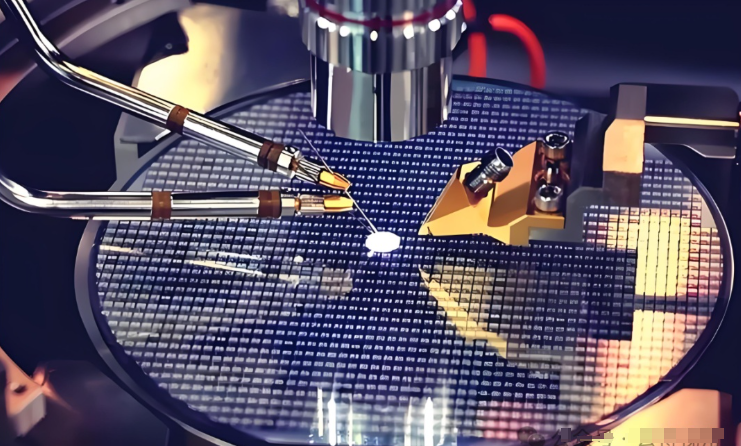
Stop Waiting on Hot Air: Why IR is the Way to Go for Semiconductor Processing
Let’s be honest: hot air circulation is a drag. It’s slow. You’re basically sitting around waiting for the air to get hot, then waiting for that air to heat up your substrate. In the world of semiconductor processing, those wasted minutes aren’t just annoying—they’re costing you real money. We decided to stop heating the air and start heating the part. That’s where infrared (IR) heating and precision aluminum reflectors come in.
The Secret is in the Reflector
If you just use an IR lamp by itself, you’re wasting half your energy. The light shoots out in every direction, meaning a huge chunk of that heat just hits the machine frame and vanishes. That’s why we use high-purity aluminum reflectors. Think of it like a mirror for heat. We curve the aluminum just right to catch that wasted energy and bounce it straight back onto the workpiece. Because aluminum handles the IR spectrum so well, we can concentrate the beam. The result? Your part hits the target temperature in seconds. Not minutes.Seconds.
Cutting Out the Middleman
Hot air systems have this annoying “thermal lag.” You have to heat the chamber, then the air, and then finally the part. It’s a lot of steps. IR just skips all that. By using a reflector, we push the maximum amount of energy directly onto the wafer or component. Plus, your setup gets a lot leaner. You can ditch the massive blowers and those bulky insulated ducts. All you really need is the lamp, the reflector, and a solid PID controller to keep things steady.
The Catch (And How to Handle It)
Now, here is the trade-off. When you have that much heat density, you have to be careful about hotspots. If your reflector is slightly off or the part is too close to the lamp, you risk burning the substrate. It happens fast. You also need a cooling system that can keep up with the rapid temperature swings so your parts don’t warp. The trick is all in the gap. We keep a very strict calibration between the lamp and the part to make sure the heat is spread evenly across the whole surface. Get that right, and everything else just clicks.